
Types of Mosquitoes in Eastern NC: What's Biting You?
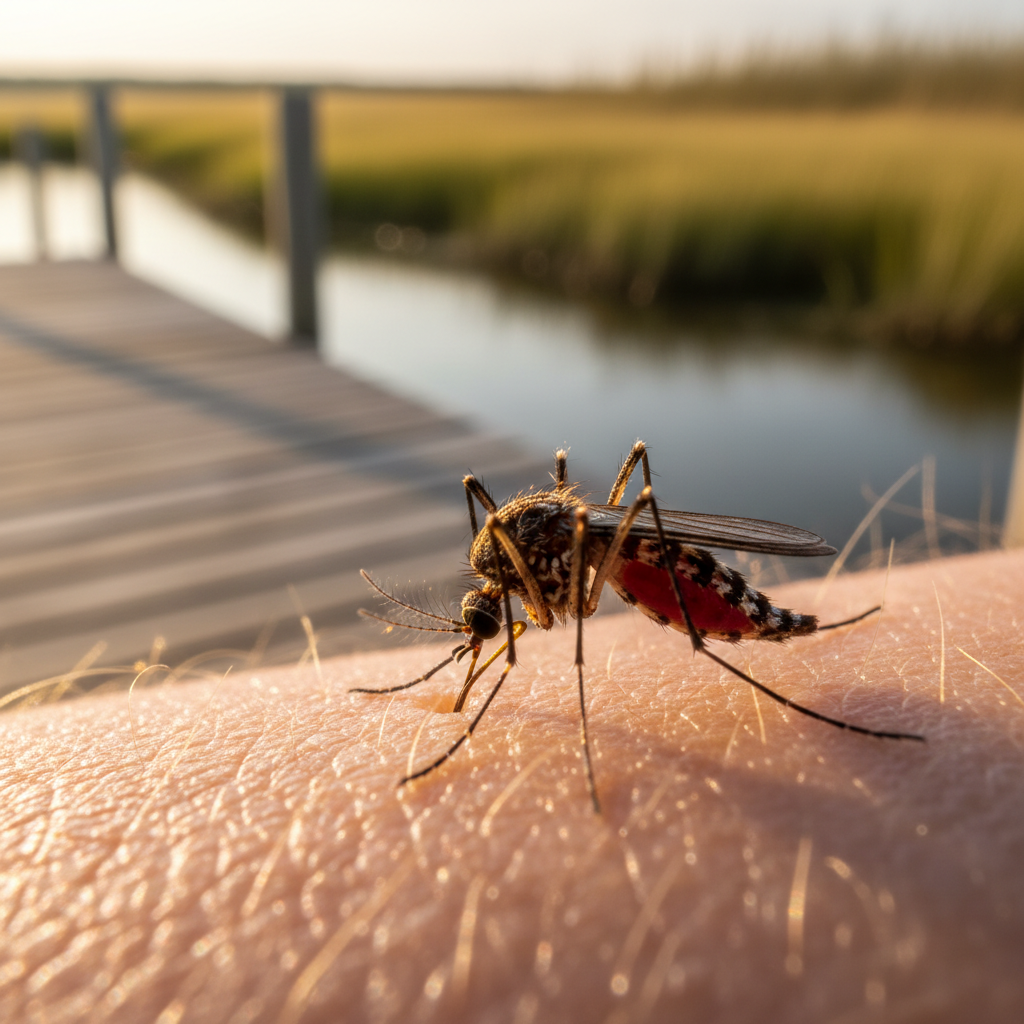
Eastern North Carolina has mosquitoes the way other places have traffic. Here's who's actually out there — and why it matters.
If you live in Eastern North Carolina, you already know that mosquito season is less of a 'season' and more of a 'way of life.' The warm temperatures, the rivers, the tidal creeks, the marshes, the standing water after every summer storm — we have basically built a five-star resort for mosquitoes and then wondered why they keep showing up. But here's something most people don't realize: not all mosquitoes are the same. Different species bite at different times of day, breed in different types of water, fly different distances, and carry different diseases. Knowing which mosquito is after you is the first step to actually doing something about it. Here are the five most common mosquito species in Eastern NC and what makes each one a problem.
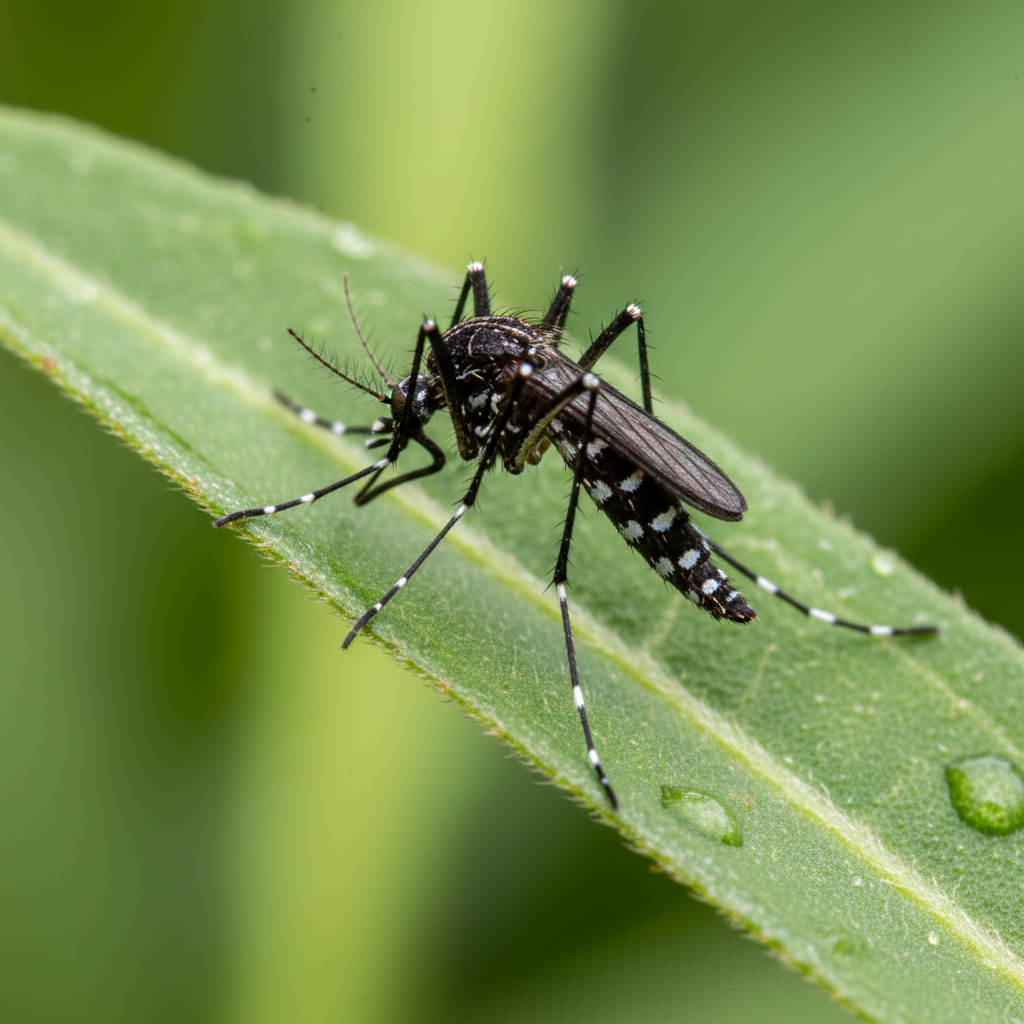
1. The Asian Tiger Mosquito — The One Biting You at 2 PM
Scientific name: Aedes albopictus. Common name: Asian Tiger Mosquito. Identifying feature: small, jet-black body with bold white stripes on its legs and body — it genuinely looks like a tiny tiger.
If you have ever been bitten while gardening at noon, eating lunch on your porch, or walking to your car in the afternoon — this is the mosquito responsible. The Asian Tiger Mosquito is an aggressive daytime biter, which catches a lot of Eastern NC residents off guard because most people think mosquitoes only come out at dusk. Not this one. It bites all day, every day, from spring through fall.
The Asian Tiger Mosquito does not need a pond or a ditch to breed. It breeds in tiny amounts of standing water — the water that collects in a flower pot saucer, a clogged gutter, a bottle cap, a tire rut in your driveway. It was introduced to the United States in the 1980s through used tire shipments and has absolutely thrived in Eastern NC's warm, humid climate. It is now one of the most abundant mosquito species throughout Craven, Carteret, Pitt, and Onslow counties.
The Asian Tiger Mosquito can transmit dengue fever, Zika virus, and chikungunya — all serious diseases, though confirmed local transmission in NC is limited. It remains the mosquito most responsible for ruining afternoon cookouts, gardening sessions, and outdoor playtime for kids across Eastern NC.
What to do about it:
- Eliminate every container holding standing water in your yard — including ones you have forgotten about. Asian Tiger Mosquitoes do not travel far from where they breed, so if they are biting you in your yard, they are breeding somewhere in your yard. Professional barrier treatment creates a protective zone that kills them on contact when they land on vegetation.
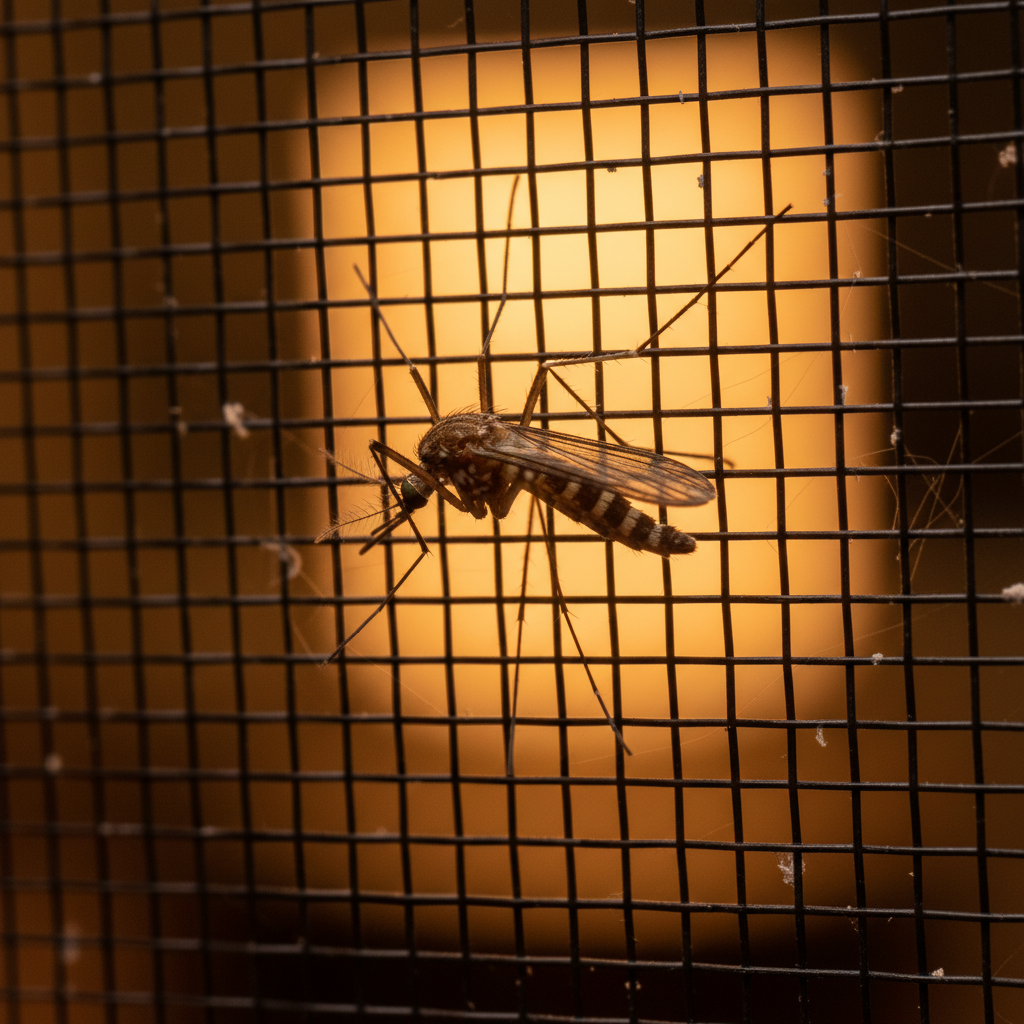
2. The Southern House Mosquito — The One Keeping You Up at Night
Scientific name: Culex quinquefasciatus. Common name: Southern House Mosquito. Identifying feature: medium brown, slightly smaller than you would expect, with pale banding across the abdomen. You will probably hear it before you see it.
This is the mosquito whining near your ear at 11 PM. The Southern House Mosquito is a nighttime biter — it is most active from dusk to dawn — and it is the species most likely to find its way inside your home through screens and open doors. If you have ever woken up with an inexplicable mosquito bite and no idea where it came from, congratulations: you have met the Southern House Mosquito.
It breeds in stagnant, organically rich water — storm drains, ditches, catch basins, and any standing water that has been sitting long enough to grow algae. Eastern NC's flat topography and frequent rainfall create perfect breeding conditions. It is one of the most abundant mosquito species in the region year-round.
The Southern House Mosquito is the primary vector of West Nile Virus in North Carolina. West Nile is well-established in Eastern NC — the NC Department of Health and Human Services confirms positive cases in our region regularly. Most people who contract West Nile experience mild flu-like symptoms, but in older adults and immunocompromised individuals, it can cause severe neurological complications.
What to do about it:
- Check your window and door screens for gaps or tears. Eliminate standing water in and around your property. Professional mosquito control programs that treat resting areas — vegetation, under decks, and shaded areas — dramatically reduce Southern House Mosquito populations around your home.
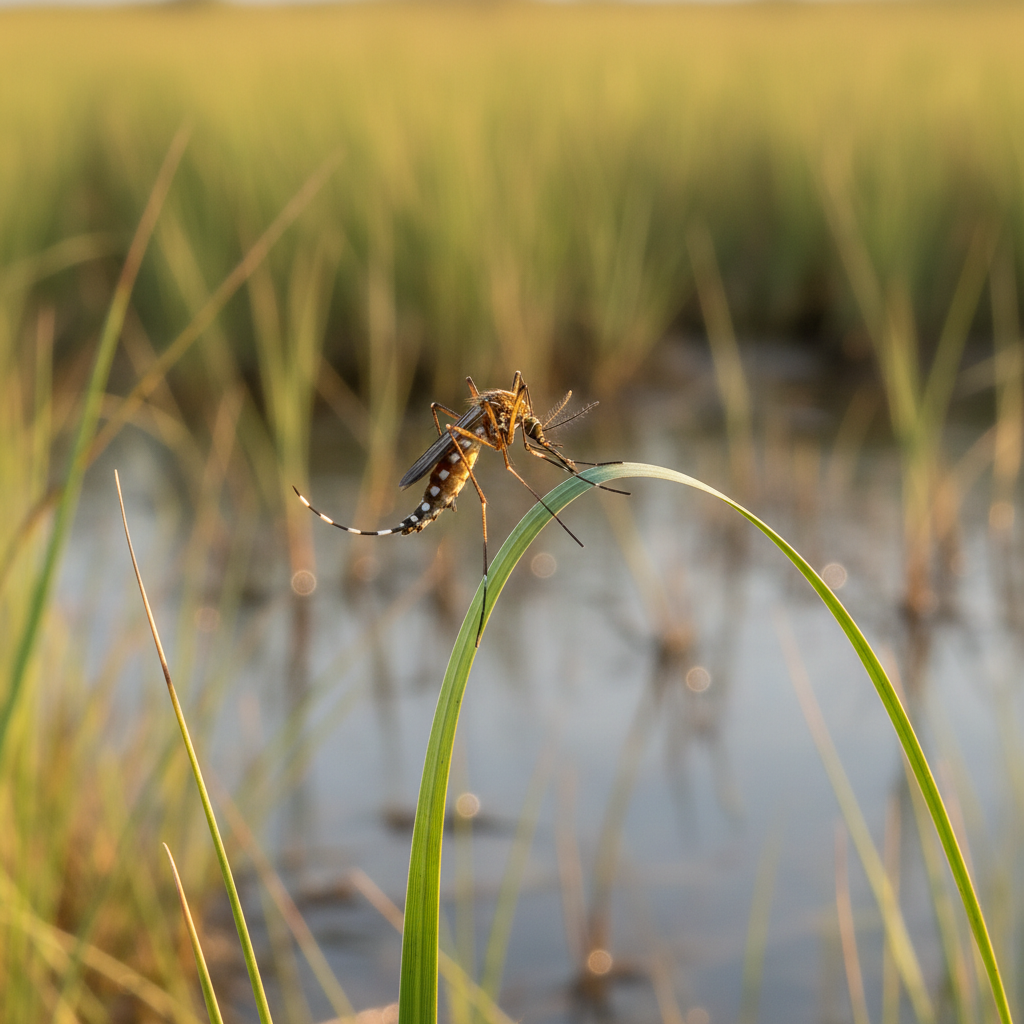
3. The Eastern Saltmarsh Mosquito — The Crystal Coast's Own
Scientific name: Aedes sollicitans. Common name: Eastern Saltmarsh Mosquito. Identifying feature: golden-brown body with distinctive white and yellow banding on the abdomen, about the size of a standard mosquito but noticeably bold-looking.
If you live or have ever spent time near the coast — Morehead City, Beaufort, Atlantic Beach, Emerald Isle, or anywhere along the Crystal Coast — you have definitely met this one. The Eastern Saltmarsh Mosquito breeds in coastal saltmarshes and tidal flats, and what makes it particularly impressive (in the most annoying way possible) is that it can fly up to 10 to 40 miles from its breeding site. It does not stay near the marsh. It comes for you wherever you are.
Coastal NC's extensive marsh systems — from the marshes surrounding the Newport River estuary to the tidal wetlands along Bogue Sound — create vast breeding habitat for the Eastern Saltmarsh Mosquito every time the tides flood the marsh. After a high tide event or coastal flooding, saltmarsh mosquito populations can surge dramatically within 72 hours.
These mosquitoes are aggressive biters, active during the day and at dusk, and they show up in large numbers. Outdoor events, waterfront dining, and marina activities in Carteret County are frequently disrupted by saltmarsh mosquito surges in summer, particularly after storm events and unusually high tides.
What to do about it:
- Individual yard treatment helps significantly with saltmarsh mosquitoes that have landed in your area, even if you cannot treat the breeding source miles away. Professional barrier treatments applied to resting vegetation on your property kill saltmarsh mosquitoes when they land before they can bite. On the Crystal Coast, recurring treatment is the most effective strategy given the continuous breeding pressure from coastal marshes.
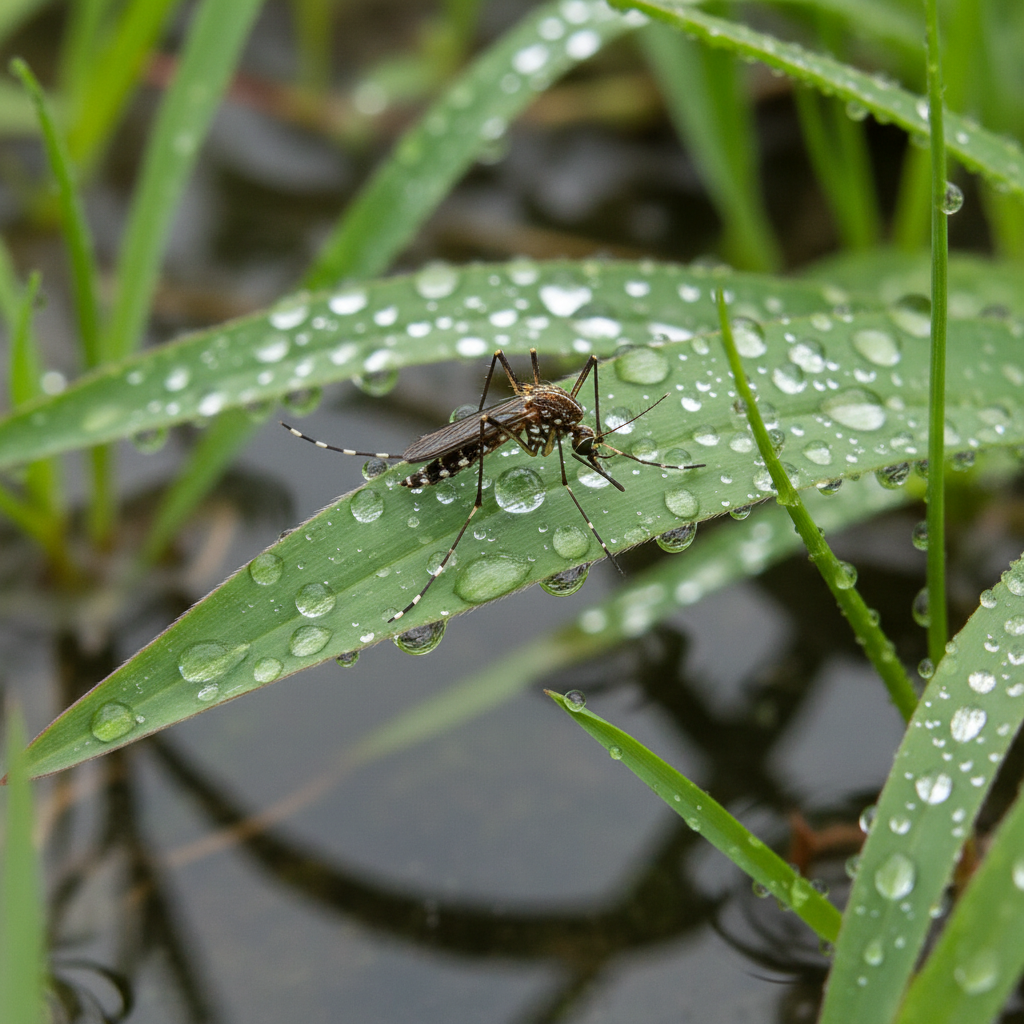
4. The Inland Floodwater Mosquito — The One That Shows Up After Every Storm
Scientific name: Aedes vexans. Common name: Inland Floodwater Mosquito. Identifying feature: medium brown with narrow white bands across each abdominal segment. Vexans, by the way, means 'annoying' in Latin. The scientists knew exactly what they were doing with that name.
Eastern NC gets a lot of rain. Tropical storms, nor'easters, afternoon summer thunderstorms, hurricane remnants — and every time significant rain falls and water spreads across low-lying areas, Aedes vexans hatches in enormous numbers. This species lays its eggs in moist soil rather than open water, and those eggs can survive for years waiting for flooding to trigger hatching. A single rain event can hatch millions of them simultaneously.
If you have ever noticed that within a few days after a big storm, your yard is suddenly swarming with mosquitoes — worse than normal, seemingly coming from everywhere at once — that is the Inland Floodwater Mosquito emergence. It happens in waves throughout the summer whenever significant rainfall floods low-lying areas across Craven, Pitt, and Onslow counties.
These mosquitoes are strong fliers — they can travel several miles from their hatch sites — and they bite aggressively at dusk and into the evening. They are not the primary vector of major diseases in NC, but the sheer volume in which they emerge after storms makes them one of the most disruptive mosquito species for Eastern NC residents.
What to do about it:
- You cannot prevent rain. But professional barrier treatments applied before and immediately after storm events can significantly reduce the floodwater mosquito population that ends up on your property. Staying on a recurring treatment schedule through the summer months keeps your yard protected even when post-storm surges hit.
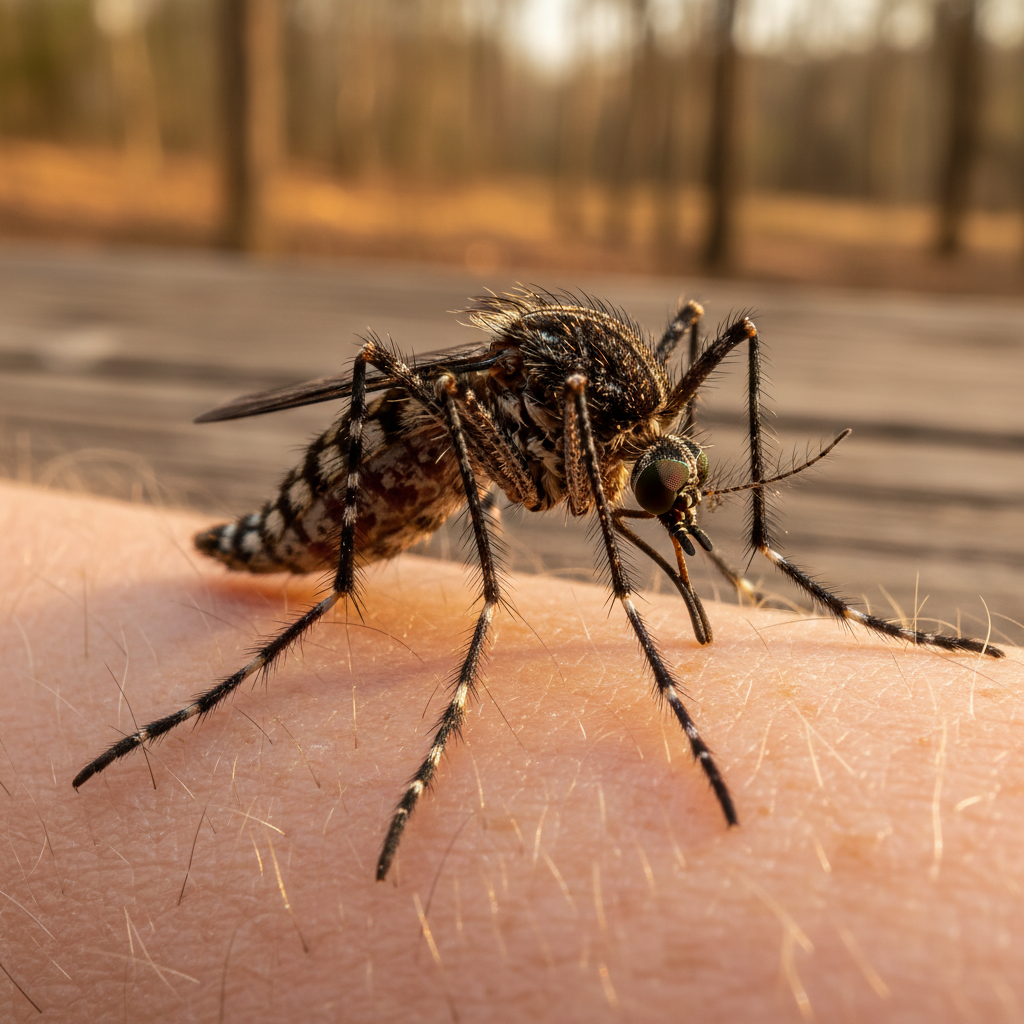
5. The Gallinipper — Eastern NC's Mosquito Legend
Scientific name: Psorophora ciliata. Common name: Gallinipper. Other names used in Eastern NC: "the big one," "the giant mosquito," "that thing," and various unprintable variations.
The Gallinipper is real, it lives here, and it is enormous. We are talking about a mosquito up to 20 times the size of a normal mosquito — roughly the size of a quarter when fully grown. It has shaggy, feathery-looking dark scales on its legs. It is unmistakable. If you have ever swatted at what you thought was a small fly and been startled by the size of what you hit, you have met a Gallinipper.
Like the Inland Floodwater Mosquito, Gallinippers hatch from eggs laid in moist soil and emerge explosively after flooding events. Eastern NC's low-lying geography and regular tropical weather activity means Gallinipper emergence events happen regularly — particularly after hurricanes and major flood events. After Hurricane Florence in 2018 and similar events, Eastern NC residents reported Gallinipper swarms that were genuinely shocking in their size and aggression.
The bite of a Gallinipper is reported to be noticeably more painful than a standard mosquito bite — which makes sense given the size of the mosquito delivering it. They bite during the day and at dusk, and they do not give up easily. They are persistent in the way that only a creature that has survived 100 million years of evolution can be.
What to do about it:
- Gallinippers are a post-flooding phenomenon. If you know a significant storm or flood event is coming, schedule a professional barrier treatment immediately afterward, before emergence peaks. The good news: they are large and relatively easy for professional treatments to kill on contact. The bad news: they can emerge in numbers you have to see to believe.
So Which Mosquito Is Biting You Right Now?
Probably more than one. Eastern NC's combination of coastal wetlands, rivers, flat topography, summer thunderstorms, and warm climate means we are prime habitat for multiple mosquito species simultaneously throughout spring, summer, and fall. The Asian Tiger Mosquito is biting you in the afternoon. The Southern House Mosquito is keeping you up at night. The Saltmarsh Mosquito is coming in from the coast. The Floodwater Mosquito is hatching after every storm. And the Gallinipper is out there, enormous and unbothered.
The honest truth is that no amount of citronella candles, store-bought sprays, or mosquito bracelets is going to meaningfully address this. Eastern NC has too many mosquitoes, coming from too many sources, for anything short of a professional integrated approach to keep your yard comfortable.
That is where Eastline comes in. We provide professional mosquito control across New Bern, Morehead City, Greenville, and Jacksonville — and we understand the specific species pressure in this region because we live here too. Let us know if you are ready to take back your backyard.
Learn About Our Mosquito Control
Explore Eastline's professional mosquito control services to protect your Eastern NC property.