
Stink Bug Control in New Bern, NC
FALL INVASION PREVENTION • EXTERIOR BARRIER TREATMENT • ENTRY-POINT EXCLUSION
When the weather cools, stink bugs go looking for a warm place to spend the winter — and your walls, attic, and sunny siding look perfect. Eastline stops the invasion at the source with an exterior barrier treatment and entry-point exclusion. Serving New Bern, Morehead City, Greenville & Jacksonville.
Few pests announce themselves quite like a stink bug — the slow, clumsy flight into a lamp, the shield-shaped body on the windowsill, and the sharp odor if you swat one. Stink bugs don't bite or damage your home's structure, but when they push their way indoors by the dozens each fall looking for a warm place to overwinter, they become one of the most frustrating seasonal invaders in Eastern North Carolina. Eastline Pest Management stops them the right way — by treating the exterior before they get in and sealing the gaps they use — across New Bern, Morehead City, Greenville, Jacksonville, and the surrounding counties.
The Stink Bugs You'll See in Eastern North Carolina
"Stink bug" covers several shield-shaped, odor-producing insects that show up here. Knowing which one you have helps us treat it correctly:
Brown marmorated stink bug (BMSB)
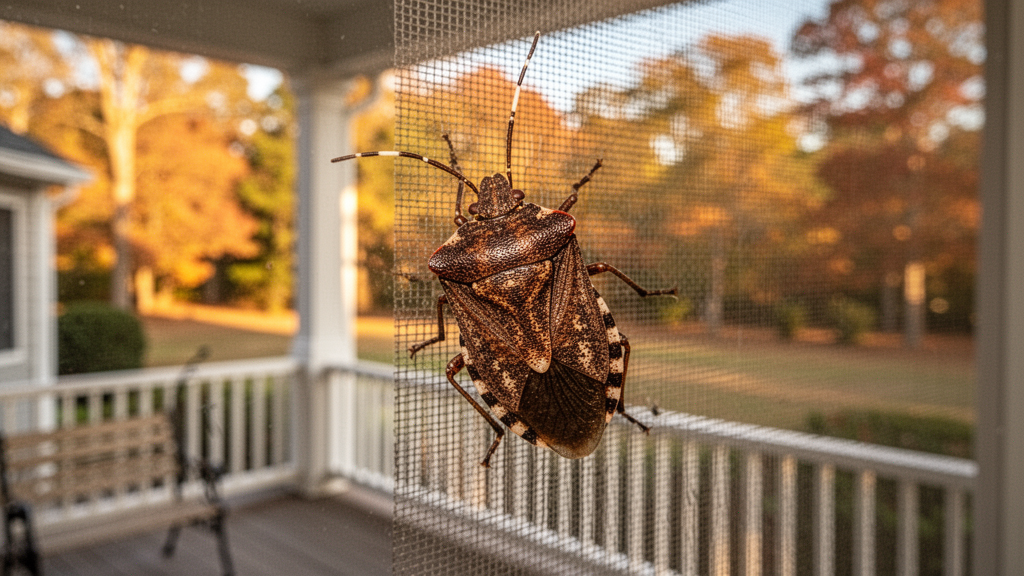
The notorious invader — about 3/4 inch, mottled brown with white bands on its antennae. It's the only stink bug in NC that deliberately moves into houses to overwinter. BMSB pressure is highest in the piedmont and mountains and lighter on the coast, but inland areas like Greenville and wooded properties still see it.
Green and brown native stink bugs
Common across the region, mainly garden and crop pests that occasionally wander indoors.
Kudzu bug
A small, olive-green relative that swarms light-colored siding in fall and spring near kudzu patches and soybean fields — very common in Eastern NC and treated the same way as stink bugs.
Look-alikes
Boxelder bugs and Asian lady beetles invade in fall for the same reason. If that's what you're seeing, we'll identify it and treat accordingly.
Why Stink Bugs Invade Homes Every Fall
Stink bugs spend the warm months outdoors feeding on plants. As nights cool below about 60°F — typically mid-September through October in our area — they begin hunting for a sheltered, insulated place to wait out winter. On sunny days you'll see them clustered on warm, south-facing walls, then slipping inside through gaps around windows, doors, siding, soffits, vents, and utility penetrations. Their flat bodies let them squeeze through surprisingly small openings. Once inside a wall void or attic, they go quiet for the winter — then reappear in the living space on warm days and again in spring as they try to get back out.
Why DIY Rarely Works (and Why You Shouldn't Crush Them)
Spraying the bugs you see indoors doesn't solve the problem — for every stink bug in the living room, more are tucked in the walls, and store-bought sprays don't reach them. Worse, crushing or vacuuming them carelessly releases the defensive odor they're named for, which can linger and even attract more bugs. The only reliable approach is to stop them at the exterior before they enter and to close the entry points they rely on. That's a job for a professional barrier treatment and exclusion — not a can of spray.
Tip: if you already have them inside, remove them with a vacuum (and empty it outside promptly) or a soapy-water jar — don't squash them.
How Eastline Gets Rid of Stink Bugs
Our approach targets the invasion at the source and is timed to beat the fall flights:
- Inspection: We identify the species and find the entry points — sunny walls, window and door gaps, soffit and gable vents, and penetrations where pipes and wires enter.
- Exterior barrier treatment: A professional residual applied to siding, eaves, foundation, and entry points, ideally before the mid-September flights, so bugs contact the treatment as they land and try to enter.
- Exclusion: We recommend and can help seal the gaps that let them in — caulking cracks, adding door sweeps, and screening vents. Exclusion is the most durable, long-term fix.
- Follow-up: Because new bugs keep flying to the structure during the season, re-treatment may be needed. Our year-round quarterly plan keeps the barrier fresh through peak season.
Are Stink Bugs Dangerous?
Stink bugs don't bite people or pets, don't sting, and don't damage your home's structure the way termites do. The problems they cause are the odor, the sheer nuisance of large numbers indoors, and — outdoors — feeding damage to garden fruit and vegetables. For most homeowners the goal is simple: keep them out of the living space and off the house.
Serving New Bern & Eastern North Carolina
Eastline handles fall stink bug and kudzu bug invasions across New Bern and Craven County — including wooded, garden-adjacent neighborhoods like Trent Woods, River Bend, and Brices Creek where overwintering pressure is highest. We also serve Greenville and Winterville in Pitt County (which tends to see more BMSB than the immediate coast), Morehead City and the Carteret County coast, and Jacksonville in Onslow County. Homes near tree lines, fields, and heavy landscaping see the most activity — and those are exactly the properties our exterior barrier program is built for.
Why Homeowners Choose Eastline
Family-owned and local for 25+ years — we know Eastern NC's seasonal pests firsthand.
Licensed NC technicians; QualityPro certified; NC Pest Management Association member.
Exterior-first approach that stops the invasion at the source instead of chasing bugs indoors.
Kid- and pet-conscious products applied by professionals.
400+ five-star reviews and a 100% satisfaction guarantee.
Stink Bug FAQs
Stop Stink Bugs Before They Get Inside
Seeing stink bugs on your siding or windowsills? The best time to treat is before they get inside. Call Eastline at (252) 633-1719 or request a free estimate, and we'll build a plan to keep them out this fall and next.
Locally owned • NC licensed & insured • QualityPro certified • 25+ years in Eastern NC