
Rodent Season Starts Now: The Eastern NC Fall Invasion Timeline
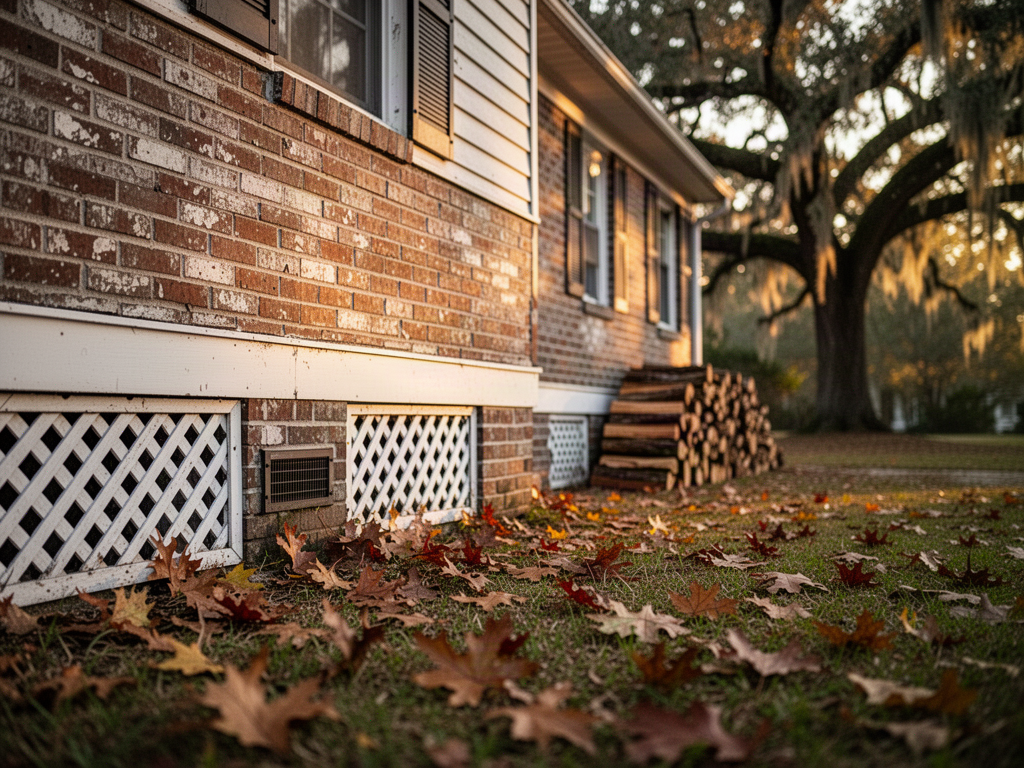
Most people call us in November when they hear scratching above the ceiling. The reality is that by the time you hear them, the animal has been inside your house for weeks. Rodent movement follows a strict schedule. On the Carolina coast, that schedule starts in September. If you want to handle fall rodent prevention effectively, you have to start before they move indoors. Waiting until winter means a harder and more expensive job. Here is exactly what happens month by month, and when you should seal your house.
Why fall is different in Eastern North Carolina
We do not get the harsh, early winters you see up north. You might assume rodents wait until January to look for a warm place. They do not. Our rodent pressure comes from three specific converging factors that happen right around the start of fall.
First, overnight lows drop into the 50s from late September. That slight temperature shift is enough to signal to rodents that winter is coming. They start seeking shelter long before the first frost.
Second, the Atlantic hurricane season peaks around September 10. Heavy rains flood out the ditch banks and marsh burrows that Norway rats use heavily along the Pamlico County marsh edges and coastal Carteret construction sites. When the water rises, they are forced to higher ground. Higher ground usually means your crawl space.
Third, row crops come down across Pitt County farmland and Craven County agricultural areas. When acres of corn and soybeans are harvested, field mice lose their cover and their food source simultaneously. They move toward residential areas looking for a new home. You put these three factors together, and you get a massive rodent migration aiming straight for local houses.
September — the sealing window
Right now, rodents are still mostly outside. They are active, foraging, and building reserves, but they have not moved into the walls yet. This is your window. Exclusion is cheapest and most effective right now.
When you seal a house in September, you are keeping an empty house empty. You do not have to worry about trapping animals inside the structure. You do not have to worry about a female mouse already nursing a litter in your attic insulation. A proper exclusion walkthrough covers everything from the crawl space vents up to the roof returns. We get on our hands and knees to check the weather stripping under doors, the gaps where the HVAC lines enter the brick, and the small spaces around foundation vents. We are looking for anything larger than a quarter of an inch. We find the gaps, we seal the gaps, and the problem never starts. Waterfront properties on the Neuse and Trent rivers are particularly vulnerable during this window, as the local rat population is extremely high near the water.
October — first contact
This is when rodents start testing the structure. You might not have a full infestation yet, but the scouts are looking for weaknesses. They are exploring your foundation, climbing your downspouts, and squeezing under your garage doors.
Testing the structure leaves evidence. You will see fresh gnaw marks on soffit edges where a roof rat is trying to widen a gap. You will find dark grease smudges at foundation gaps where rodents have repeatedly squeezed their bodies against the brick. You might see a few droppings in the garage or a storage shed. If you catch it now, you can still stop the main invasion. If you miss these signs, the rodents will move in permanently.
You need to know exactly where to look for these early signs. Walk the perimeter of your house and check the corners of your garage doors. Look directly under the crawl space door and inspect the areas where pipes go through the exterior walls. Inside, check the back corners of your pantry and the dark spaces under your kitchen sink. These are the first places scouts will investigate when they start testing the structure.
Stop the Fall Rodent Push
Do not wait for the scratching to start. Call Eastline Pest Management at (252) 633-1719 for a free rodent inspection. We find the entry points before the mice do. Learn more about our rodent control services in Eastern NC.
November — they are inside
By November, the nights are consistently cold. The rodents that tested your house in October have moved in. They are nesting in the attic. They are pulling apart your crawl space insulation to build warm beds.
This is the month when the scratching noises start. You are lying in bed, and you hear movement. At this point, it costs significantly more to resolve the problem than it does to do preventative work in September. We cannot just seal the house anymore. We have to trap the animals inside, remove them, clean up the contamination, and then seal the house. If you are hearing noises right now, read our guide on scratching in the walls to tell mice from rats from squirrels by the sound.
December and January — breeding
Rodents do not hibernate. They do not just wait out the winter quietly. They multiply. A single female house mouse can produce a litter roughly every three weeks. If two mice get into your walls in November and you ignore the problem, a small December issue becomes a large, destructive February problem.
They will ruin insulation with urine and droppings. They will chew through electrical wiring, creating a serious fire hazard. New Bern's historic homes and older crawl spaces are especially at risk because the older timber and foundational gaps provide perfect breeding grounds. The longer they stay, the more damage they do.
What to do in September, specifically
Do not wait for the cold to take action. Walk around your property this week and complete these concrete steps:
- Trim overhanging branches back from the roofline. Roof rats use branches as a highway straight to your gutters and soffits. Keep branches at least six feet away from the roof.
- Move firewood off the foundation. Keep firewood elevated off the ground and store it at least twenty feet from the house. Woodpiles are perfect nesting sites.
- Check and repair crawl space vent screens. Older crawl spaces often have rusted or torn foundation vents. A mouse can fit through a hole the size of a dime.
- Seal utility and pipe penetrations. Look exactly where the HVAC lines, plumbing, and electrical conduits enter the house. Fill any gaps with chew-proof materials like copper mesh and exterior sealant.
- Fix door sweeps and garage door seals. If you can see daylight under an exterior door, a mouse can get in. Replace worn rubber seals before it gets cold.
- Clear leaf litter and dense ground cover against the foundation. Do not give rodents a dark, hidden place to travel while they look for an entry point. Keep the foundation perimeter clear.
- Secure pet food and bird seed. Keep all outdoor animal feed in heavy plastic or metal bins with tight-fitting lids. Loose food attracts rats immediately.
- Keep gutters draining away from the house. Moisture attracts rodents just as much as food does. Ensure downspouts push water far from the foundation.
Taking care of these items in early fall gives you a massive advantage. You remove the food, you remove the cover, and you block the doors. When the temperature drops, the rodents will look for an easier target.
Protect Your Home This Season
Eastline Pest Management is a family owned, QualityPro certified company with over 25 years of experience. We offer same-day service, free inspections, and absolutely no cancellation fees. With over 400 five-star reviews and a 4.9 rating, we provide a 100% satisfaction guarantee serving Craven, Pitt, Carteret, Pamlico and Onslow counties. Contact us at info@eastlinepest.com, call (252) 633-1719, or visit our office at 1140 Broad Creek Rd, New Bern, NC 28560. Let us handle your rodent control services in Eastern NC.
Frequently Asked Questions
When does rodent season start in North Carolina?
Rodent season in Eastern North Carolina typically begins in September. The combination of cooling overnight temperatures, agricultural harvesting, and fall storm flooding drives rodents to seek shelter. Taking action in early fall prevents infestations before they move indoors.
Do mice come inside even when it is warm?
Yes. While cold weather is a primary driver, mice also seek shelter from heavy rain and flooding. A strong coastal storm or persistent heavy rainfall can push rodents into crawl spaces regardless of the outside temperature.
What temperature makes mice move indoors?
Mice generally start seeking warmer shelter when overnight temperatures consistently drop into the low 50s. In Eastern NC, this shift usually happens in late September or early October, triggering the initial push toward houses.
Are field mice and house mice the same thing?
No. Field mice primarily live outdoors and feed on seeds and crops, though they will move inside when fields are harvested. House mice are adapted to living alongside humans year-round and will nest directly inside walls and insulation.
Is it too late to rodent-proof in October?
It is not too late. October is a critical window because rodents are actively testing structures. Sealing gaps now stops the main winter push, though you must ensure no animals have already nested inside before closing entry points.