
Why Are Mice Coming Into My House in the Fall in Eastern NC?
The short answer: it isn't just the cold. Here's what's really pushing mice indoors this time of year, and what you can do about it this week.
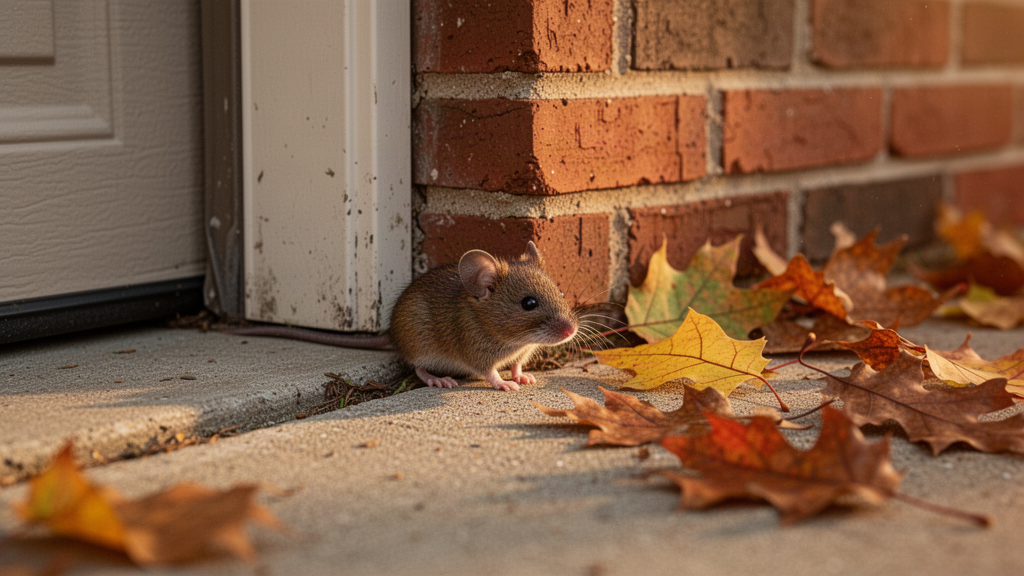
Every fall, our phones at Eastline start ringing with the same question. A homeowner in New Bern, Jacksonville, Morehead City, or Greenville spots a dropping in the pantry or sees something dart behind the stove, and they want to know: why now? The summer was quiet. Nothing changed. So where did the mice come from?
Most people assume it's the cold, and that's part of it. But in Eastern North Carolina, our first real freeze often doesn't show up until November, and mice are already moving in weeks before that. The truth is that several things happen at the same time every fall, and together they send mice looking for the nearest warm, dry building with something to eat inside. Too often, that's your house.
1. The First Cool Nights Matter More Than the First Freeze
A house mouse weighs about as much as a few pennies. A body that small loses heat fast, so mice react to the first stretch of cool nights, not the first frost. When evening temperatures in Eastern NC start dipping into the 50s, usually from late September into October, mice start looking for steady warmth.
Your home gives off that warmth all night long. Warm air and food smells drift out of every small gap around pipes, vents, and doors, and mice are very good at following them back to the source.
2. Their Outdoor Food Supply Disappears
Through spring and summer, mice live well outside on seeds, insects, garden scraps, and crop fields. In the fall, that food dries up quickly. Gardens die back, insects slow down, and across Eastern NC the corn, soybean, cotton, tobacco, and sweet potato fields get harvested.
When a field is cut, the mice living in it lose their food and their cover in the same week. They scatter, and the homes, barns, and garages closest to that farmland are the first places they go. You don't need to live next to a farm to feel this, either. Wooded lots, overgrown ditches, and empty fields in town go through the same fall change.
3. Summer Created a Lot of Young Mice
Mice breed heavily through the warm months. A single female can have a litter of around half a dozen pups roughly every three weeks, and those pups are ready to breed themselves in about two months. By September, the outdoor mouse population is at its biggest point of the year.
All those young mice need their own territory. As competition grows and food shrinks, the younger ones are pushed out to explore, which means more mice testing more homes than at any other time of year.
4. Hurricane Season Floods Them Out
This one is unique to our part of the state. September and October are the heart of hurricane season, and even a tropical storm that doesn't make headlines can drop several inches of rain on Eastern NC. In our flat, low-lying landscape, that water fills ditches, soaks fields, and floods the shallow burrows and ground nests mice live in.
Displaced mice head for higher, drier ground. Crawl spaces, garages, sheds, and the gap under your deck are all easy choices. If you notice new rodent activity a week or two after a big rain, that's very likely why.
5. Our Fall Habits Open the Door
Some of the reasons are on us. Normal fall routines make it easier for mice to find their way inside without anyone noticing:
- Leaving the garage door open for hours during yard work or tailgate prep
- Stacking firewood against the house or bringing armloads of it inside
- Pulling holiday decoration boxes out of the attic, where mice may already be nesting
- Storing birdseed, grass seed, or bags of pet food in the garage or shed
- Raking leaves into piles against the foundation, which gives mice hidden cover right next to the house
- Setting pumpkins, gourds, and corn stalks on the porch, which are food sitting at the front door
Why One Fall Mouse Turns Into a Winter Problem
Here's the part most homeowners don't expect. Mice don't come inside to hibernate. Once they're in your walls, attic, or crawl space, they keep breeding all winter long in the warmth. One or two mice that slip in during October can become a much larger population by February.
That's why fall is the best time to act. Keeping mice out in October usually means sealing a few openings. Getting them out in February means removing an established population first, which takes longer and costs more.
Keeping mice out in October is a sealing job. Getting them out in February is a removal job.
What You Can Do This Week
You don't have to wait for a mouse sighting to get ahead of fall. These quick steps make your home a lot less attractive:
Fall Mouse-Proofing Checklist
- Move birdseed, pet food, and grass seed into hard plastic or metal bins with tight lids
- Stack firewood at least 20 feet from the house and off the ground
- Trim shrubs and ground cover back so they don't touch your siding
- Rake leaves away from the foundation instead of piling them against it
- Close the garage door when you're not actively using the garage
- Stand in your closed garage on a sunny day: if you see daylight at the door edges, mice can get in
- Make sure your crawl space door closes tightly and isn't damaged
- Check decoration boxes for droppings or shredded paper before bringing them into living areas
Fall Mouse Myths We Hear Every Year
"We keep a clean house, so we won't get mice."
Clean homes get mice too. Mice come in for warmth and shelter first. A spotless kitchen helps, but it won't keep them from nesting in your attic insulation or crawl space.
"Peppermint oil or plug-in sound devices will keep them away."
We hear this one constantly. These products might cause mice to avoid one spot for a short time, but they don't stop a hungry, cold mouse from moving into a warm house. The only lasting fix is closing the openings they use.
"Once it gets really cold, the mice outside will die off."
Eastern NC winters are mild. Our cold snaps are short, and the mice that matter most to you are the ones already inside, where it's warm year-round.
When It's Time to Call a Pro
If you've seen a mouse, found droppings in more than one spot, or are hearing noises in your walls or ceiling at night, it's time for an inspection. Not sure if that sound is a mouse? Our post on telling apart mice, rats, and squirrels in your walls can help you figure it out.
Eastline's technicians find exactly how mice are getting in, remove the ones already inside, and seal those openings with durable materials that hold up. We serve homeowners across Craven, Carteret, Onslow, Pamlico, and Pitt counties.
Hearing Something in the Walls This Fall?
Book a free rodent inspection with Eastline, or call (252) 633-1719. We'll tell you what's getting in, where, and how to stop it before winter.